Topic: Spirit Guides
Presenter(s): Willow, Kathy
Date: 12/1/11
Spirit Guides
"A spirit guide is a being which connects itself to you, most commonly to offer guidance. Some spirit guides will stay with you for life while others may be with you only for a few minutes."Types of Spirit Guides:
Messenger Guide: A messenger guides appears in your life briefly to impart some piece of information, be it a warning or spiritual revelation. These guides can be a powerful presence in your psyche, or a soft zephyr on the edge of your consciousness. Because these guides are completely impartial, the message they bring can have a negative or positive impact on your life.
Shadow Guide: These guides impart strong feelings of fear in those they appear to. Their purpose is to impart a lesson you have not learned through repeated mistakes. Generally, these mistakes are born through negative character traits such a jealousy, avarice, and anger. If these guides are ignored, they will keep reappearing in your life, bringing stronger emotions with them, until the lesson is learned. Most commonly these guides appear at times of testing.
Journey Guide: These guides appear to you when you make a decision to follow a certain path in life. They will guide your footsteps on that path, and leave when you have finished that cycle in your life.
Life Guide: These are the typical “Spirit Guides” that everyone thinks of. They may enter your life at any point and stay with you until the very end. Sometimes your Life Guide will be replaced with a different guide when your life path shifts outside of the previous guide’s ability to help.
Seeking a Spirit Guide:
Most commonly spirit guides are found through meditation, although it is possible for them to reveal themselves via dreams. In some traditions, it is wise to have an offering on hand, to thank the guide for choosing to guide you.
When seeking a guide, drop into a meditative state focused on asking for guidance. Have a clear defined reason in your mind why you want to meet your guide. Remember, your spirit guide is not for you to pick. You may love foxes, but have a guide that is a sparrow. Spirit guides are not bound by what you like, but answer to what you need. In your meditation, you may either allow a landscape to form around your astral self, or meditate in a complete and empty place. When in a landscape, often the guide will come from behind something (a tree or building) to reveal itself to you. When surrounded by nothing, you will often see animal forms in the distance, hunting, playing, in general going about their business. The animals will fade out of sight until your guide remains.
These are only two common ways of seeking a guide. How you search for your guide is
up to you.
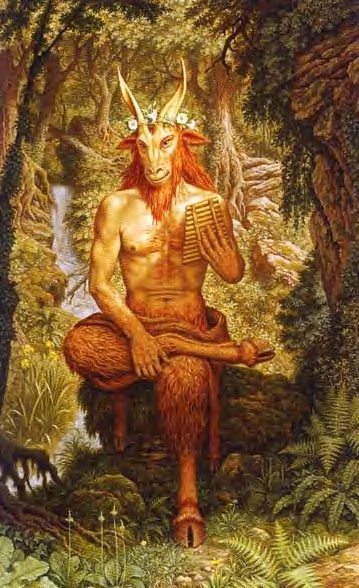
Developing and Maintaining Your Relationship:Once you have connected with one or more of your spirit guides, the next step is to develop and maintain your relationship. The first step to developing a close relationship with your guide is to learn about it. If it is an animal, learn about its behavior and physiology. If possible, visit its habitat and meditate. If your guide is a mythological being, learn the legends surrounding it. And if your guide is a human, try to judge the era it is from and learn about what its life would have been like. No matter what you guide, it is always good to place an image of it or its kind on your altar to honour it. To maintain your relationship with your guide, communicate with it. Don’t feel self conscious speaking aloud to it if it is around. By verbally addressing your spirit guide, you help anchor yourself to it. It is always nice to leave treats out for your guide if you can.
Contacting Your Guide:If you need or wish to seek your guide’s advice and it is not around, find a place where you can meditate. When meditating, form in your mind the issue you would like help with and wait. You may not receive a response. Your guide may feel that this is an issue you must deal with on your own, or the problem may be outside of the guide’s scope.
Guides are not omnipresent and can only help you using there own skill set. A good metaphor for this would be like a plumber to rewire your house. A plumber is no less skilled than an electrician, but their skills lie a realm apart. Likewise, a squirrel is no less skillful as a guide than a bear is, yet they each can only assist you with what they know.